

As wildfires intensify globally, reliable damage prediction is increasingly vital. This study develops and evaluates Random Forest and XGBoost models to classify structural outcomes (no damage, damaged, destroyed, inaccessible) using pre-fire attributes (e.g., roof type, assessed value, year built). After SMOTE rebalancing, both models achieve ∼90% accuracy, with XGBoost performing slightly better on minority classes. Feature importance analysis reaffirms that newer, high-value homes and fire-resistant construction features (e.g., enclosed eaves, ember-resistant vents) substantially reduce wildfire damage risk. While distinguishing partial damage from destruction remains challenging, the approach markedly enhances risk assessment, guiding targeted resource allocation and evidence-based policies for structural resilience in fire-prone regions.


GREAT
EXPERIENCE
My research combines experimental testing, behavioral modeling, statistical analysis, and machine learning to study fire alarm interpretation and evacuation decision-making. During my doctoral work at Universiti Putra Malaysia, I developed the FAIR framework to better understand early evacuation behavior in buildings
AUTONOMY
I work with strong autonomy, managing complex research tasks, data analysis, and technical problem-solving with efficiency and precision. My background also includes Python, SPSS, ArcGIS, and web technologies, which helps me turn research data into practical results
INVOLVMENT
I value collaboration and contribute actively within multidisciplinary teams. Through publications, conference presentations, and ongoing academic work, I aim to bridge the gap between human behavior, engineering, and real-world safety solutions
Predicting California Wildfire Damage to Structures Using Machine Learning: A Comparative Study of Random Forest and XGBoost
LJUBLJANA - SLOVENIA
Predicting California Wildfire Damage to Structures Using Machine Learning: A Comparative Study of Random Forest and XGBoost
LJUBLJANA - SLOVENIA
Abstract
Exploration of Trends and Characteristics in Malaysian Building Fires and Wildfires (2000-2019)
BARCELONA - SPAIN
Exploration of Trends and Characteristics in Malaysian Building Fires and Wildfires (2000-2019)
BARCELONA - SPAIN
Abstract
Efforts to reduce fire casualties are crucial, and fire statistics are considered an important element that provides vital insights for assessing future risks. In line with Malaysia’s development, this study conducts a comprehensive analysis of the 9 fire indicators in Malaysia from 2000 to 2019 with the aim to explore fire incident patterns, including causes, fatalities, injuries, and associated losses. A notable escalation in fire breakouts and associated risks during this period were observed. Arson emerges as the leading cause of these incidents, closely followed by electricity and smoking-related fires. This analysis facilitates the deeper comprehension of fires trends in Malaysia and open the door for future comparison with other countries offering valuable insights for the fire department to forecast future fire scenarios.
Fire incidence and relative risk analysis in Malaysia (2000–2019): patterns, causes, and implications for safety and prevention
New Delhi - India
A study of staff pre-evacuation behaviors in a Malaysian hotel
Fire and Materials
A study of staff pre-evacuation behaviors in a Malaysian hotel
Fire and Materials
Abstract
Simulating fire and evacuation scenarios is crucial for engineers to assess building safety during fire incidents. Accurate simulations require data on occupants' behaviors, particularly during the pre-evacuation phase as these decisions significantly impact evacuation duration. Gathering comprehensive data from diverse regions while considering cultural and regional variations is necessary to understand how occupants' behavior is influenced. Thus, this study focuses on examining the behavior of Malaysian hotel staff during unannounced fire drill to gain insights into factors affecting their behavior during pre-evacuation stage, such as fire experience, fire alarm, drill participation, fire training, and awareness. The study categorizes the actions performed by the hotel staff into sequences and analyses them based on influencing factors. The findings indicate that instead of immediately evacuating in response to emergency notification, the hotel staff engage in various actions. Most staff members initially investigate or ignore the emergency, resulting in longer pre-evacuation times. Moreover, the results suggest that previous drill participation and high awareness levels contribute to shorter pre-evacuation times. Conversely, previous fire experience, fire training, and fire alarm familiarity have no effect on pre-evacuation time.
How to cite this article: Noumeur A, Lovreglio R, Md Said MS, Baharudin MR, Mohamed Yusoff H, Mohd Tohir MZ.
A study of staff pre-evacuation behaviors in a Malaysian hotel. Fire and
Materials. 2025;49(2):138‐161. doi:10.1002/fam.3250
Predicting spatial sound attenuation in buildings with machine learning: Implications for fire alarm placement
Process Safety and Environmental Protection
Predicting spatial sound attenuation in buildings with machine learning: Implications for fire alarm placement
Process Safety and Environmental Protection
Abstract
From Risk Perception to Action: Exploring Factors Influencing Evacuation Behavior in a Real Fire Scenario
Fire Technology
From Risk Perception to Action: Exploring Factors Influencing Evacuation Behavior in a Real Fire Scenario
Fire Technology
Abstract
Understanding human behavior in fire is crucial for improving fire safety strategies and the effectiveness of the evacuation process. This study examines the factors influencing evacuation behavior during a real fire scenario in a Malaysian residential building, focusing on emotional, environmental, and social factors. Data were collected through a post-fire questionnaire distributed to occupants, assessing their perceptions, preparedness, and responses to the fire. The analysis employed descriptive and inferential techniques to identify key behavioral patterns and demographic differences. The findings reveal that emotional responses, environmental conditions, and social influence significantly shaped evacuation behavior. Preparedness levels varied across demographic groups, highlighting vulnerabilities in specific populations. Emotional responses, such as fear, significantly influenced decision-making. These findings emphasize the need for tailored interventions, clear communication strategies, and enhanced fire safety protocols inside the building to support effective evacuations.
How to cite this article: Noumeur, A., Noumeur, M.N., Md Said, M.S. et al. From Risk Perception to Action: Exploring Factors Influencing Evacuation Behavior in a Real Fire Scenario. Fire Technol 62, 28 (2026). https://doi.org/10.1007/s10694-025-01829-4
DEVELOPMENT OF THE FIRE-ALARM INTERPRETATION RESPONSE (FAIR) GUIDELINE FOR EARLY EVACUATION IN MALAYSIAN BUILDINGS
Malaysia
Predicting California Wildfire Damage to Structures Using Machine Learning: A Comparative Study of Random Forest and XGBoost
LJUBLJANA - SLOVENIA
Exploration of Trends and Characteristics in Malaysian Building Fires and Wildfires (2000-2019)
BARCELONA - SPAIN
Fire incidence and relative risk analysis in Malaysia (2000–2019): patterns, causes, and implications for safety and prevention
New Delhi - India
A study of staff pre-evacuation behaviors in a Malaysian hotel
Fire and Materials
Predicting spatial sound attenuation in buildings with machine learning: Implications for fire alarm placement
Process Safety and Environmental Protection
From Risk Perception to Action: Exploring Factors Influencing Evacuation Behavior in a Real Fire Scenario
Fire Technology
DEVELOPMENT OF THE FIRE-ALARM INTERPRETATION RESPONSE (FAIR) GUIDELINE FOR EARLY EVACUATION IN MALAYSIAN BUILDINGS
Malaysia
- Uncategorized
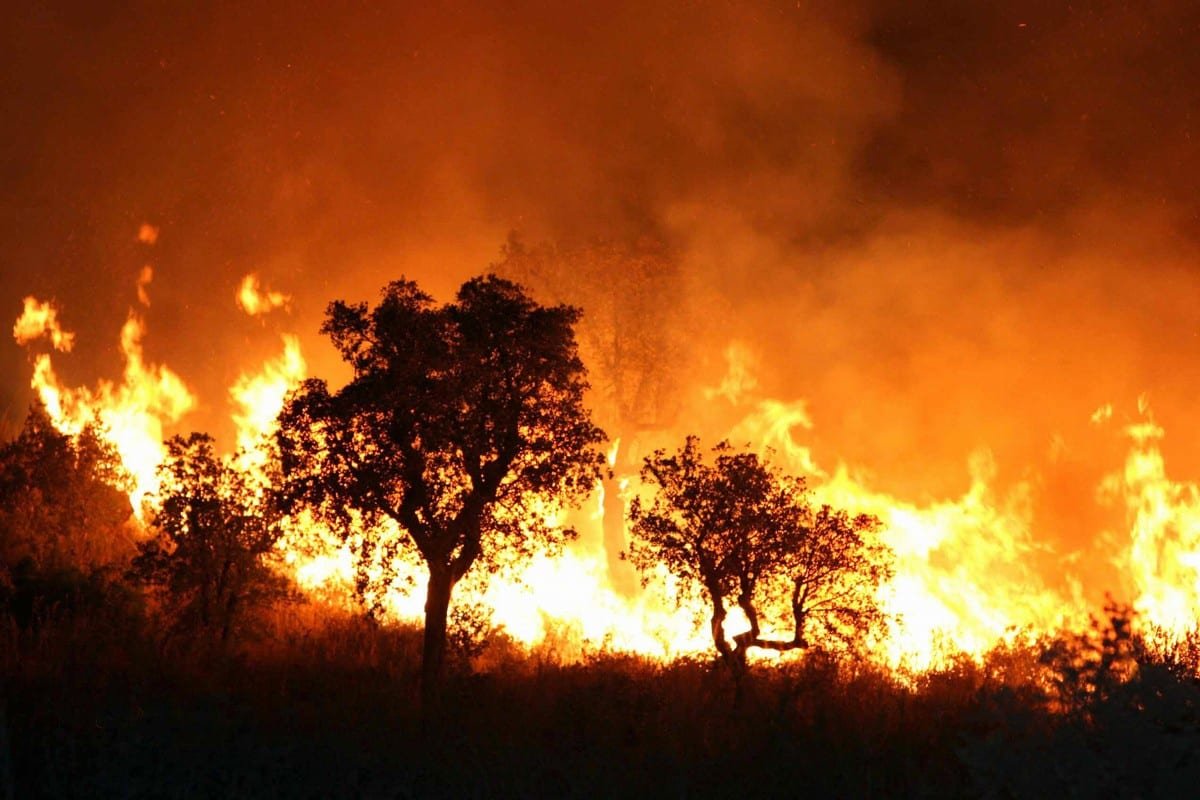
What Algeria’s Fires Tell Us About WUI Evacuation Safety
What Algeria’s Fires Tell Us About WUI Evacuation Safety
August 29, 2026
Watching images of recent wildfires in Algeria is difficult.
Beyond the visible destruction of forests, homes, infrastructure, and landscapes, these events raise a more difficult question for fire safety professionals:
What happens when a wildfire reaches a community faster than people can understand the threat, make a decision, and evacuate?
This is one of the central challenges of Wildland–Urban Interface (WUI) fire safety.
A wildfire that remains in a remote forest presents one set of challenges. A wildfire that moves toward populated areas creates a much more complex emergency involving fire spread, smoke, buildings, roads, emergency services, communications, traffic, and—critically—human decision-making.
The question is no longer simply How do we stop the fire?
It becomes:
Can people recognize the threat, receive a credible warning, decide what to do, and reach safety before conditions become untenable?
Algeria Is Not New to the Wildfire Problem
Wildfire is not an emerging issue for Algeria.
Research examining the country's historical fire activity has shown that wildfires are strongly concentrated in northern Algeria, particularly in humid and subhumid areas where vegetation provides greater fuel availability. Fire activity is also associated with human presence, including croplands and built-up areas located alongside shrublands and forests. [1]
This geographical relationship is important because it brings wildfire and human settlements into the same risk environment.
Research on Algeria's wildfire history has also identified significant challenges in wildfire management and argued that suppression alone is unlikely to be sufficient for the country's future wildfire risk. Prevention, fuel management, and broader wildfire-management strategies are also required. [2]
This is where the concept of the Wildland–Urban Interface becomes particularly relevant.
What Is a Wildland–Urban Interface Fire?
The WUI describes areas where human development meets or is intermingled with wildland vegetation.
These environments can include:
- houses located close to forests;
- villages surrounded by vegetation;
- suburban development expanding into fire-prone landscapes;
- roads and infrastructure crossing forested areas; and
- communities where buildings and natural fuels are closely connected.
When wildfire enters such an environment, the emergency becomes multidimensional.
Fire behaviour can change rapidly.
Smoke can reduce visibility.
Road capacity can become a limiting factor.
Power and communications can be disrupted.
Residents may have incomplete information.
And evacuation routes that appear safe at one moment may become hazardous later.
This makes WUI evacuation fundamentally different from treating evacuation as simply a matter of moving people from Point A to Point B.
Evacuation Is a Human Decision Before It Is a Traffic Problem
One of the most important findings from wildfire evacuation research is that people do not necessarily evacuate immediately after receiving a warning.
They first have to interpret the situation.
Research on WUI fire behaviour identifies a range of factors influencing protective-action decisions, including risk perception, previous experience, social and environmental cues, preparation, family responsibilities, location, and perceptions of the credibility of the threat. [3]
In other words, receiving information is not equivalent to acting on it.
A person may receive an evacuation message and still ask:
Is the fire actually close to me?
Is the warning serious?
Where is the fire moving?
Should I wait for more information?
Should I protect my home first?
Are my family members ready?
Which road should I take?
These questions can consume valuable time.
The "Wait and See" Problem
One particularly important behaviour identified in wildfire research is the tendency to wait and see.
Rather than immediately evacuating, some residents observe how the situation develops before deciding whether to leave.
This behaviour is not necessarily irrational.
People may be attempting to reduce uncertainty. They may be trying to confirm whether the fire actually threatens them, waiting for information from authorities, checking environmental conditions, contacting relatives, or assessing whether evacuation is necessary.
However, in a rapidly developing wildfire, waiting can reduce the amount of time available for evacuation.
Research comparing WUI residents in France and Australia found that "wait and see" responses were influenced by the type of cues people received, their preparedness, previous wildfire experience, and their perceived risk during the event. [4]
This has an important implication for emergency planning:
The objective of a warning system should not simply be to deliver information. It should help people understand the threat well enough to take appropriate protective action.
Warnings Matter but So Does Trust
Research from the 2016 Chimney Tops 2 fire in Tennessee found that both fire cues and warnings from trusted sources influenced people's risk perceptions before evacuation decisions. Risk perception, in turn, was strongly associated with evacuation decisions. [5]
This illustrates a fundamental principle of emergency communication:
People need more than information. They need information they can interpret and trust.
A warning saying that a wildfire exists may not be enough.
Residents may need to know:
- where the fire is;
- how rapidly it is moving;
- which areas are threatened;
- what action is expected;
- where they should go;
- which evacuation routes remain available; and
- how urgently they need to act.
The communication problem becomes especially difficult when the fire is developing faster than official information can be updated.
Evacuation Delay Can Become a Safety-Critical Variable
Recent research examining the 2021 Marshall Fire in Colorado provides another important perspective.
The study investigated risk perception, evacuation decisions, and evacuation delay among people affected by the fire. It found that several factors influenced whether people evacuated and how long they delayed before leaving. Fire cues, previous risk perception, warnings, household characteristics, preparation activities, and the timing of alerts all played roles. [6]
This is significant for fire safety engineering.
Traditional evacuation analysis often focuses heavily on the physical movement of people :
How quickly can people travel along an evacuation route?
But that calculation can miss an earlier stage of the problem:
When do people actually begin moving?
If a household spends 20 minutes interpreting the threat, collecting belongings, contacting family members, or deciding whether the warning applies to them, those 20 minutes become part of the evacuation problem.
The evacuation process therefore begins before people enter the road network.
From Fire Spread to Human Response
This is one reason WUI evacuation modelling is becoming increasingly important.
A useful WUI evacuation model cannot consider only wildfire spread.
It needs to consider the interaction between:
Fire → Information → Human decision → Movement → Traffic → Safety
Researchers have developed integrated modelling approaches specifically for this problem.
For example, the WUI-NITY platform couples wildfire spread, pedestrian behaviour, and traffic movement to simulate evacuation scenarios in WUI communities. The objective is to provide a more comprehensive representation of how a wildfire emergency evolves and how people respond to it. [7]
This type of approach is important because the fire and the population do not operate independently.
As the fire changes, people's perceptions change.
As warnings change, decisions change.
As people begin evacuating, traffic conditions change.
And as traffic conditions deteriorate, the feasibility of evacuation changes again.
The emergency is therefore a dynamic system.
What Does This Mean for Algeria?
Algeria presents an important case for further research.
The country already has a substantial wildfire history, particularly across northern forested regions. Existing research has identified both environmental and human factors contributing to the spatial distribution of wildfire activity. [1]
At the same time, research on wildfire management in Algeria has highlighted the need to move beyond a predominantly suppression-oriented approach and strengthen prevention and proactive management. [2]
But prevention should not stop at vegetation management or firefighting capacity.
Community evacuation preparedness deserves equal attention.
We need to better understand questions such as:
- How do Algerian residents perceive wildfire risk?
- How quickly do residents recognize that a wildfire threatens their community?
- Which warning channels do people trust?
- How do residents respond to official evacuation warnings?
- How common is "wait and see" behaviour?
- How much time do households need to prepare before departure?
- How do families make evacuation decisions?
- What happens when evacuation routes become congested?
- How do elderly people, children, and people with mobility limitations affect evacuation timing?
- How does previous wildfire experience influence future decisions?
- How should warnings change as fire conditions deteriorate?
These are not merely communication questions.
They are life-safety questions.
The Importance of Pre-Evacuation Time
From a fire safety perspective, one variable deserves particular attention:
pre-evacuation time.
This is the period between the point at which people become aware of the threat and the moment they actually begin evacuation movement.
It can include:
- receiving or noticing a warning;
- interpreting the information;
- confirming the threat;
- deciding whether evacuation is necessary;
- informing other household members;
- collecting essential belongings;
- assisting vulnerable people;
- preparing vehicles;
- selecting an evacuation route; and
- finally leaving.
Every one of these actions consumes time.
And when wildfire conditions are changing rapidly, time is a finite safety resource.
Research on wildfire evacuation has repeatedly demonstrated that human behaviour, rather than simply physical movement capacity, can substantially influence evacuation outcomes. [3,5,6]
This means that improving evacuation safety requires understanding why people leave when they do—not simply how fast they travel once they leave.
We Should Not Wait Until the Next Fire
The loss of life associated with wildfire disasters should not be viewed only through the lens of firefighting response.
It should also prompt questions about preparedness.
Could residents recognize the threat earlier?
Could warnings reach them sooner?
Could the warning be more specific?
Could evacuation decisions be supported with clearer information?
Could vulnerable households be identified before an emergency?
Could evacuation routes be tested under realistic wildfire scenarios?
Could communities practice evacuation before they actually need to evacuate?
These questions shift the focus from reacting to wildfire toward building community resilience before wildfire occurs.
WUI Fire Safety Needs a Broader Approach
Wildfire risk cannot be reduced to a single intervention.
Fire suppression is important.
Early detection is important.
Fuel management is important.
Land-use planning is important.
Building resilience is important.
But so are human behaviour and evacuation preparedness.
The research increasingly shows that people are active participants in wildfire emergencies. Their perceptions, experiences, information sources, decisions, and actions all influence how an evacuation unfolds. [3–6]
For fire safety engineers, emergency planners, authorities, and researchers, this creates an important opportunity.
We need to connect wildfire science with human behaviour.
We need to connect warning systems with evacuation modelling.
And we need to connect community preparedness with the actual time available for people to reach safety.
Algeria's Wildfire Risk Is Also a Human Behaviour Problem
The images coming from Algeria are a reminder of the destructive power of wildfire.
But they should also encourage a deeper discussion about preparedness.
The central question should not only be:
How do we fight the next wildfire?
It should also be:
How do we make sure people have enough time, information, and capacity to survive it?
That means treating evacuation as an integral component of wildfire safety—not as something that begins after the fire reaches a community.
For communities exposed to WUI fire, the difference between warning and evacuation can be measured in minutes.
And sometimes, those minutes determine the outcome.
Wildfires are a tragedy first.
But they are also a warning.
As wildfire risk continues to challenge communities across the Mediterranean and beyond, WUI fire safety deserves substantially more attention—not only in how we manage fire, but in how we prepare people to respond when the fire arrives.
References
[7] Jonathan Wahlqvist, Enrico Ronchi, Steven M.V. Gwynne, Max Kinateder, Guillermo Rein, Harry Mitchell, Noureddine Bénichou, Chunyun Ma, Amanda Kimball, Erica Kuligowski, The simulation of wildland-urban interface fire evacuation: The WUI-NITY platform,
Safety Science, Volume 136, 2021, 105145, ISSN 0925-7535, https://doi.org/10.1016/j.ssci.2020.105145.
- Building Fire
When Fire Alarms Fail to Be Heard: A Lesson from Wang Fuk Court
When Fire Alarms Fail to Be Heard: A Lesson from Wang Fuk Court
March 29, 2026
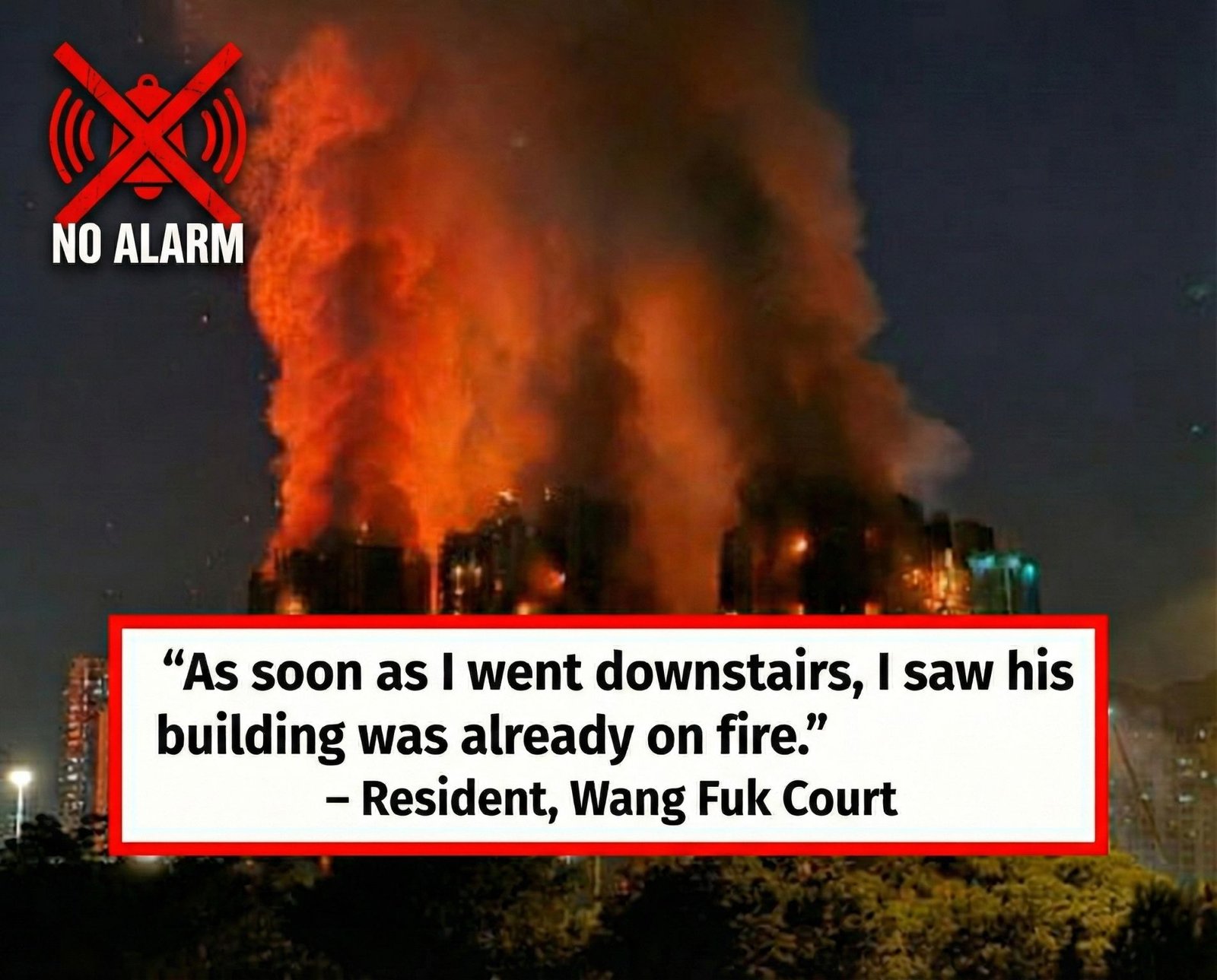
Reading accounts from the recent fire at Wang Fuk Court in Hong Kong is deeply distressing. One resident reportedly described the moment this way: “As soon as I went downstairs, I saw his building was already on fire.” That kind of testimony is a stark reminder that, in life-threatening emergencies, seconds matter and warning systems must perform reliably.
From a fire safety engineering perspective, this event highlights a critical issue that is sometimes underestimated: audibility. A fire alarm is only effective if the warning signal actually reaches the occupants in time and at sufficient clarity to prompt action. When that does not happen, the protection system loses one of its most essential functions.
This is precisely why our recent work, Predicting Spatial Sound Attenuation in Buildings with Machine Learning: Implications for Fire Alarm Placement, focuses on the acoustic side of life safety. Traditional methods can be limited in complex residential layouts, where sound does not travel uniformly and local “deaf spots” may leave some occupants insufficiently alerted. Our research explores how machine learning can improve the prediction of sound attenuation in built environments, with the goal of supporting better alarm placement and more reliable warning coverage.
The broader lesson is simple: life safety cannot depend on chance, proximity, or the hope that occupants will notice indirect cues in time. Fire alarm design must account for how people actually experience warning signals in real buildings. Robust acoustic modeling is therefore not a technical luxury; it is a fundamental part of ensuring that an alarm, once triggered, is actually heard.